
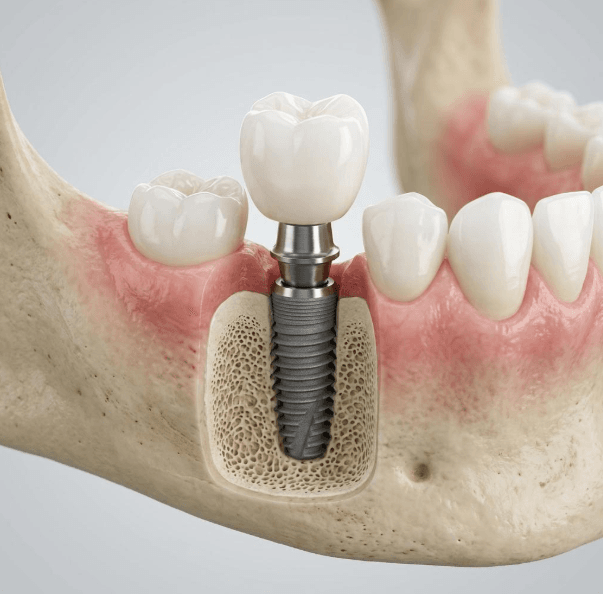
Osteoporosis affects bone density and strength, which may raise questions for people considering dental implants. Since implants rely on the jawbone for stability, some patients wonder whether reduced bone density automatically prevents them from receiving implant treatment.
The answer is not necessarily. Having osteoporosis does not automatically mean dental implants are unsuitable. However, bone health, medical history, medications, and the condition of the jawbone all need to be considered before treatment.
Why Bone Health Matters for Dental Implants
A dental implant is placed into the jawbone, where it gradually integrates with the surrounding bone. This process, known as osseointegration, provides the foundation for the replacement tooth. Osteoporosis primarily affects the skeleton, but changes in bone density may also be relevant to the jaw.
Lower bone density may influence how the jaw responds to implant placement and healing. This does not mean that every person with osteoporosis will experience problems. The suitability of treatment depends on individual circumstances. A dentist in Petrolia can assess the condition of the mouth and discuss whether additional evaluation may be appropriate before an implant procedure.
Your Medications Matter Too
Medication history is an important part of implant planning. Some medications used to manage osteoporosis affect bone remodelling. These include certain antiresorptive medications, such as bisphosphonates and denosumab. These medications are not a reason to stop treatment independently.
Instead, patients should provide their dental professional with a complete list of prescription medications, supplements, and relevant medical treatments. Depending on the medication and the planned dental procedure, the dental professional may discuss the situation with the patient’s physician or other healthcare provider.
How Is Implant Candidacy Evaluated?
Before recommending an implant, a dental professional will generally evaluate the teeth, gums, jawbone, and overall oral health. Dental imaging may be used to examine the available bone and identify anatomical structures that need to be considered.
The assessment may also identify problems such as untreated gum disease, infection, or inadequate bone volume. These concerns may need to be addressed before implant placement. For some patients, additional procedures may be considered to improve the available bone or prepare the treatment site. Whether such procedures are appropriate depends on the individual clinical assessment.
What If You Have Low Bone Density?
Low bone density does not automatically rule out implant treatment. The important question is whether the available bone can provide an appropriate foundation for the planned implant and whether other factors could affect healing.
A dental professional can explain the potential benefits, limitations, risks, and alternatives based on your circumstances. In some cases, another tooth-replacement option may be considered instead. Patients should also tell their dental team about previous fractures, osteoporosis treatment, and any other relevant medical conditions.
What About Dental Emergencies?
Osteoporosis itself is generally not considered a dental emergency. However, a broken tooth, severe dental pain, facial swelling, or an injury may require prompt assessment regardless of whether a patient has osteoporosis.
An emergency dentist in Petrolia may evaluate an urgent dental problem and determine what immediate care is appropriate. Any future tooth-replacement planning can then be considered once the immediate concern has been addressed.
Discuss Your Tooth Replacement Options With Petrolia Dental!
Petrolia Dental provides dental care for patients with different oral health needs. If you are considering dental implants while managing osteoporosis, our dental team can review your dental and medication history, assess your oral health, and discuss the treatment options that may be appropriate for your circumstances.