
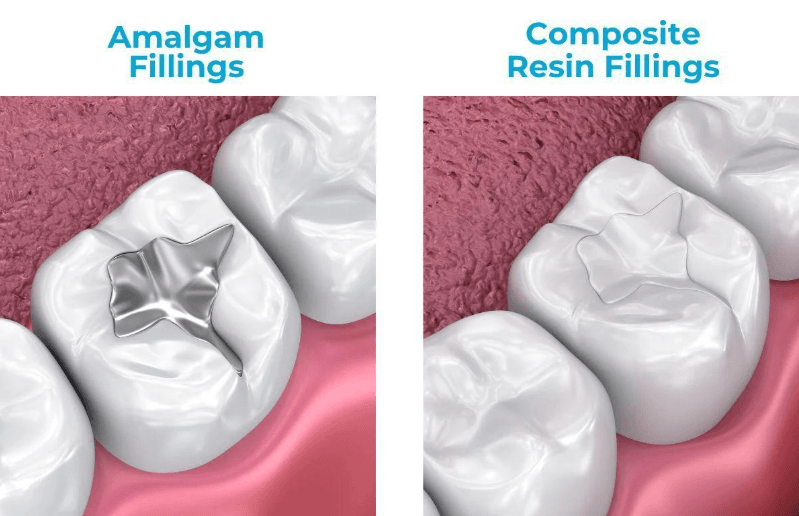
When a tooth develops decay, a filling may be used to remove the damaged portion and restore the tooth. Two commonly discussed materials are silver-coloured amalgam and tooth-coloured composite resin. Both have been used for many years, but they differ in strength, appearance, placement, and expected service life.
So, which filling lasts longer? The answer depends on the tooth, the size and location of the restoration, oral hygiene, chewing habits, and other individual factors.
How Long Do Silver Fillings Last?
Silver fillings, commonly called dental amalgam, are made from a combination of metals. They have traditionally been used for cavities in back teeth because of their durability and ability to withstand chewing forces. Amalgam restorations may remain functional for many years when properly placed and maintained. However, their lifespan is not guaranteed.
Cracks in the surrounding tooth, wear, recurrent decay, or changes in the restoration may eventually require treatment. Amalgam is also more noticeable than tooth-coloured materials. This appearance is one reason some patients discuss alternative filling materials with their dental professional.
How Long Do Composite Fillings Last?
Composite fillings are made from a tooth-coloured resin material. They are designed to blend more closely with natural tooth structure, making them less noticeable. Composite restorations have improved over time and may provide good durability when used appropriately.
Their longevity can vary depending on factors such as the size of the filling, the tooth being treated, biting forces, and moisture control during placement. A smaller composite restoration may have different long-term considerations than a large restoration on a heavily used back tooth.
Which Material Lasts Longer?
It is difficult to declare one material the longer-lasting choice for every patient. Research has found that restoration longevity depends on several variables, including the material, restoration size, tooth location, and clinical circumstances. For some larger restorations in back teeth, amalgam may have advantages related to durability.
Composite may be appropriate in many situations, particularly when appearance is an important consideration. Your dental professional can assess the tooth and explain which materials are suitable for your circumstances. A dentist in Petrolia can also discuss whether an existing filling should simply be monitored, repaired, or replaced.
What Affects the Life of a Filling?
Daily habits can influence how long a restoration remains functional. Regular brushing with fluoride toothpaste, cleaning between teeth, and routine dental examinations may help reduce the risk of new decay around a filling.
Teeth grinding or clenching may place additional stress on restorations. Frequent consumption of sugary foods and drinks can also contribute to decay around existing fillings. A filling that feels sensitive, painful, loose, or rough should be assessed rather than ignored. Prompt evaluation may help determine whether the restoration or the tooth requires attention.
When Is Emergency Care Needed?
A damaged filling does not always require emergency treatment, but sudden or severe dental pain should receive timely attention. A broken restoration, fractured tooth, facial swelling, or significant injury may require urgent assessment.
If you experience an unexpected dental problem outside your regular appointment, an emergency dentist in Petrolia may be able to assess the situation and determine the appropriate next step.
Discuss Your Filling Options With Petrolia Dental!
Petrolia Dental can assess your tooth and discuss appropriate restorative options based on your individual dental needs. Whether you are considering a new filling or have concerns about an existing restoration, an examination may help clarify the next step. If you are experiencing sudden discomfort or a damaged filling, contact Petrolia Dental to discuss whether an appointment or urgent assessment is appropriate.