
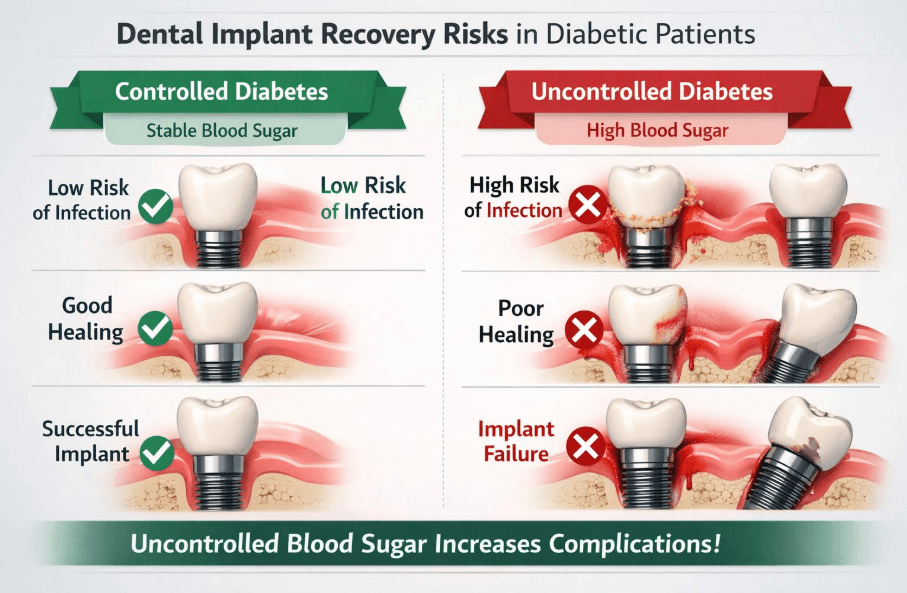
Dental implants involve more than placing an artificial tooth root into the jaw. Their long-term function depends on how the implant integrates with surrounding bone and how well the gums and supporting tissues are maintained. For some patients, existing health conditions and medications may influence these factors.
Blood sugar control and medications used for bone health are two areas that deserve attention before implant treatment. This does not mean that every person taking these medications will experience complications. Instead, a complete medical and dental history allows the dental team to consider relevant risks and plan care appropriately.
Why Blood Sugar Control Matters
Elevated blood sugar levels can affect several processes involved in oral health and healing. Poorly controlled diabetes, for example, may be associated with an increased risk of gum disease and delayed healing. Since healthy gum tissues and adequate healing are important around an implant, blood sugar management should be considered before and after treatment.
Your dentist may ask about your diabetes history, medications, recent blood sugar information, and overall medical care. Patients should never stop or change diabetes medication because of planned dental treatment. Coordination with the healthcare professional managing the condition may be appropriate when necessary.
The Connection Between Bone Health and Implants
Dental implants rely on the jawbone for support. Certain medications used to manage bone conditions affect how bone is remodelled. Some medications, including antiresorptive drugs, may influence bone metabolism. These include certain bisphosphonates and other medications used to reduce bone loss.
Their effects can vary depending on the medication, dosage, duration of treatment, route of administration, and the patient’s overall health. This does not automatically rule out dental implant treatment. However, patients should provide their dentist with a complete list of medications and explain why each medication has been prescribed.
Why Your Medical History Matters
Before considering implants, a dental professional will assess factors such as oral hygiene, gum health, available bone, existing dental conditions, and relevant medical history.
A Petrolia dental provider may also ask about medications that affect bone health or blood sugar management. This information helps the dental team determine whether additional consultation, investigation, or planning is appropriate. Do not stop prescribed medication without speaking with the physician or healthcare professional responsible for your treatment.
Maintaining the Implant After Treatment
Successful implant care does not end when the implant is placed. Daily oral hygiene and professional dental examinations remain important. Plaque accumulation around an implant may contribute to inflammation of the surrounding tissues.
Patients should also report changes such as persistent swelling, bleeding, discomfort, or changes in how an implant feels. Prompt assessment may help identify concerns before they progress. An emergency dentist in Petrolia may be appropriate when a dental problem requires urgent assessment, although not every implant concern represents an emergency.
A Personalized Approach Matters
There is no single set of instructions that applies to every implant patient. Blood sugar levels, bone health, medication history, oral hygiene, smoking status, and other factors may all be relevant. A dental professional can review these factors and explain the potential benefits, limitations, and risks of treatment based on the individual situation.
Discuss Your Implant Options With Petrolia Dental!
Considering dental implants starts with an assessment of your oral health, medical history, and individual needs. Petrolia Dental can discuss your concerns and explain what may be involved before treatment is considered. Take the next step by speaking with Petrolia Dental about your implant concerns and the options available for your dental needs.